How to Read a Tyre Sidewall: What Do All Those
Numbers and Letters Mean?
Ever crouched down beside your car and stared blankly at the wall of numbers stamped
onto your tyre? You’re not alone. To most drivers, a tyre sidewall looks like a secret code —
and in a way, it is.
But once you know how to crack it, those letters and numbers tell you
everything you need to know about your tyres.
Whether you’re shopping for replacements, checking compatibility, or simply curious, this
guide will decode every key marking — and show you how East London Tyres-mobile tyre fitting service
makes getting the right tyres fitted quick and hassle-free.
Understanding Tyre Size Markings
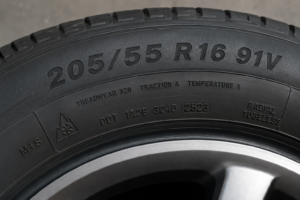
The most important string of characters on any tyre looks something like this:
205/55 R16 91V
Let’s break that down piece by piece.
1. Tyre Width — 205
The first number is the width of the tyre in millimetres, measured from sidewall to
sidewall.
2. Aspect Ratio — /55
The number after the slash is the aspect ratio — the height of the tyre’s sidewall expressed
as a percentage of its width. So 55 means the sidewall height is 55% of 205mm, which
works out at roughly 113mm.
A lower aspect ratio (like 35 or 40) means a lower-profile tyre, typically seen on sportier
cars. A higher number means a taller sidewall, common on family cars and SUVs.
3. Construction Type — R
The letter R stands for Radial construction, which is the standard for virtually all modern
tyres. You may occasionally see D (diagonal/bias-ply) on older or specialist vehicles, but the
vast majority of tyres on UK roads are radial.
4. Rim Diameter — 16
This tells you the size of the wheel rim in inches that the tyre is designed to fit. In our
example, 16 means the tyre fits a 16-inch rim. This number must match your wheel exactly.
5. Load Index — 91
The load index is a numerical code representing the maximum weight each tyre can safely
support. 91 corresponds to 615kg per tyre. Here are a few common values:
6. Speed Rating — V
The final letter is the speed rating, indicating the maximum sustained speed the tyre is
certified for. Common ratings include:
Other Important Sidewall Markings
Beyond the main size code, there are several other markings worth knowing about:
DOT Code & Manufacture Date
Look for a string beginning with DOT. At the end you’ll find a 4-digit number — the first two
digits show the week of manufacture, and the last two show the year. For example, 2423
means the tyre was made in week 24 of 2023.
XL or Extra Load Marked as XL or Reinforced, this means the tyre is built to carry a higher load than a
standard tyre of the same size — common on vans, SUVs, and heavier vehicles.
Tyre Wear Indicator
TWI — Tread Wear Indicator, Found in the grooves of the tread rather than the sidewall itself, TWI markers sit at exactly1.6mm — the UK legal minimum tread depth. When your tread wears down to reveal these markers, it’s time for new tyres.
Why This Matters When Replacing Your Tyres
When you need new tyres, matching all of these figures — width, aspect ratio, rim size, load
index, and speed rating — is essential for safety, legality, and optimal performance. Fitting
the wrong size can affect your speedometer accuracy, suspension, and even invalidate your
insurance.
The good news? You don’t need to memorise any of this. Simply check your current tyre
sidewall, note down the full size code (e.g. 205/55 R16 91V), and our team will source and
fit the right tyres for your vehicle.
Need New Tyres? We Come to You.
East London Tyres is your local Mobile Tyre Service, we cover North East London & Essex. Contact us for all your tyre needs, home, work or emergency roadside. Mob: 07966558652 0r 0800 0025 411.